MENTAL HEALTH & FINANCIAL DISTRESS
January 13, 2021

Financial Difficulties - Causes and Impacts


Financial distress can have a significant impact on a person's mental health and well-being. The fear of the unknown, and concerns about how unmanageable debt will impact loved ones is difficult. There are often other events to cause financial difficulties such as health, illness, family, or disrupted employment. Currently, the coronavirus pandemic has created a lot of strain and challenges, making financial situations hard to predict. 


In difficult times, financial issues are often avoided or, understandably, not deemed a priority. However, mental health should always be a priority and there are some strategies which can be helpful.

Ways to Help Improve Mental Health when Facing Financial Distress


Last year the Australian Restructuring Insolvency & Turnaround Association issued a fact sheet that is still current today, especially after the holiday season; and the coronavirus temporary relief measures are withdrawn.
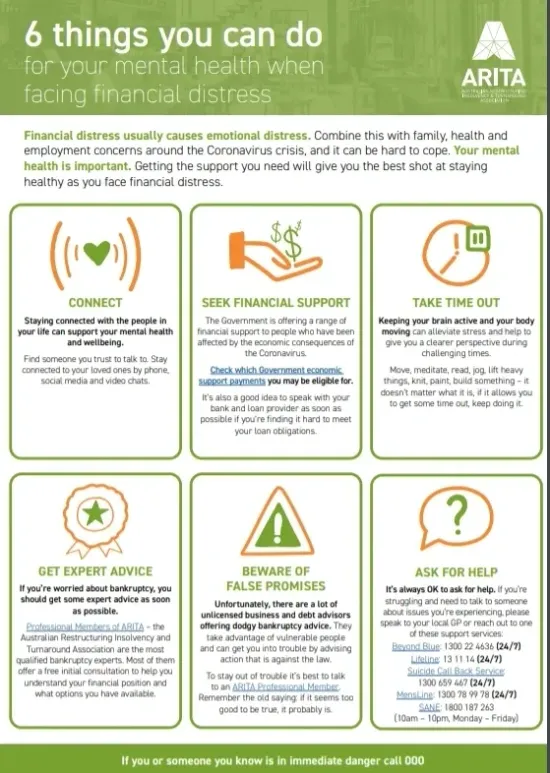
6 Things You Can Do

"A Problem Shared is a Problem Halved" Where to get help


Help is available!

In addition to the contacts listed in the ARITA fact sheet, under the "Mental Health & Wellbeing" page of our website has a comprehensive list of organisations qualified to offer help and guidance. 


Should you or someone you know be in financial difficulty, I encourage early contact with a qualified insolvency professional (like myself), for a confidential consultation as soon as possible.


If you or someone you know is in immediate danger, please call 000 or go to the nearest hospital or emergency department 

Mental Health
Bankruptcy vs Personal Insolvency Agreement Which Is Better
By Clare Corrigan • September 19, 2026
Compare bankruptcy and a Personal Insolvency Agreement in Australia. Learn the key differences in assets, income, creditor approval, costs and restrictions.
What Debts Are Not Covered by Bankruptcy
By Clare Corrigan • September 9, 2026
Find out which debts are not cleared by bankruptcy in Australia, including HECS, fines, child support, fraud debts, secured loans and more.
By Clare Corrigan • August 11, 2026
What happens to your income during bankruptcy in Australia? Clare Corrigan explains income thresholds, compulsory contributions, dependants and wages.
By Clare Corrigan • August 10, 2026
Can you keep your car if you declare bankruptcy in Australia? Clare Corrigan explains vehicle equity, the current threshold, car finance and what your trustee considers.
Will I Lose My House If I Go Bankrupt
By Clare Corrigan • July 20, 2026
Worried about losing your house if you go bankrupt? Learn how equity, mortgages and joint ownership can affect your home during bankruptcy.
How Long Does Bankruptcy Last in NSW
By Clare Corrigan • July 10, 2026
Learn how long bankruptcy lasts in NSW, when the three-year-and-one-day period begins, what can extend it, and what happens after discharge.
What Happens When You Declare Bankruptcy in Australia
By Clare Corrigan • June 20, 2026
Learn what happens when you declare bankruptcy in Australia, including its impact on debts, assets, income, property, credit and future finances.
Does Bankruptcy Clear All Debts in Australia?
By Clare Corrigan • June 10, 2026
Does bankruptcy clear all debts in Australia? Learn what debts are wiped, what remains, and when to seek expert insolvency advice.
Is a Personal Insolvency Agreement Right for You
By Clare Corrigan • May 10, 2026
Learn how a Personal Insolvency Agreement (PIA) works in Australia, its benefits, risks, and whether it’s the right alternative to bankruptcy. Get expert guidance from Clare Corrigan Personal Insolvency.
Lost Your Job and Can’t Pay Your Debts? Here’s What to Do Next
By Clare Corrigan • April 10, 2026
Lost your job and struggling with debt? Learn practical steps, legal options, and how Clare Corrigan can help you manage debts and regain financial control in Australia.